

Inside Washington: January 2026 Recap
Jump to:
Superior Electric Great Lakes Company Hosts Rep. Tom Barrett
AI Infrastructure Investment and Rural Economic Development
House Energy Subcommittee Hearings on Grid Security and Reliability
NECA Joins with other Trade Associations against CPA Ruling
NECA Supports TRIA Reauthorization
DOE Proposes Safety Rule Updates to Support Advanced Nuclear Deployment
Superior Electric Great Lakes Company Hosts Rep. Tom Barrett
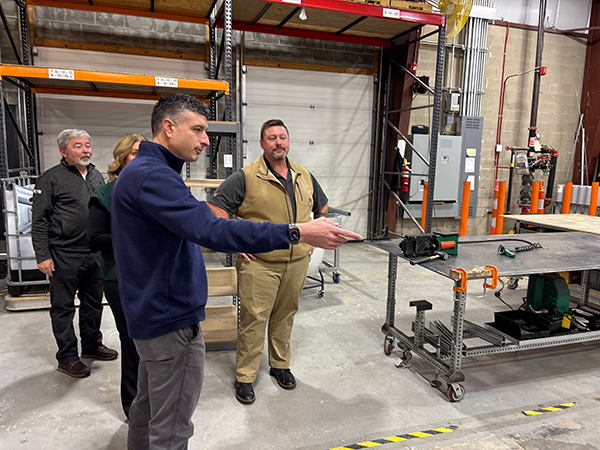
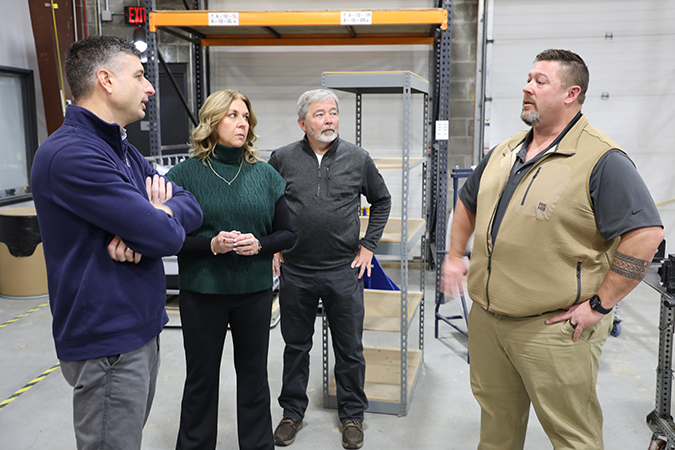
On January 29, Representative Tom Barrett (MI-7) stopped by Superior Electric for a tour and roundtable discussion.
The visit gave Rep. Barrett a firsthand look at the work NECA contractors perform and an opportunity to discuss key industry priorities, including workforce development, infrastructure investment, and the growing demand for skilled electricians.
“I enjoyed meeting the workers and leadership at Superior Electric Great Lakes. SEGLC’s electrical design and installation expertise plays an essential role in powering our economy in mid-Michigan. I’m grateful for the productive discussion we had about ways to encourage more young people and veterans to go into skilled trades. Thanks to the entire team for showing me the fascinating and critical work they’re doing.” — Congressman Tom Barrett
NECA appreciates Congressman Barrett for taking the time to meet with our members and learn about the critical role our contractors play in building and maintaining Michigan's infrastructure.
 |  |
AI Infrastructure Investment and Rural Economic Development
On January 21, the House Small Business’ Subcommittee on Rural Development, Energy, and Supply Chains held a hearing examining AI infrastructure expansion and its impact on rural America. Witness testimony noted that the nation is entering a "5th Industrial Revolution" powered by data but fundamentally built and maintained by skilled tradespeople, most of whom live in rural areas.
Local Electricians Are the Solution
Kirk Offel, CEO of Overwatch, delivered compelling remarks emphasizing that 75% of the entire AI infrastructure ecosystem is driven by small businesses. He stressed that the electrical grid is being pushed harder than ever before and that the solution will not come from "big companies flying in," but rather from the mobilization of local electricians and line crews to fortify and expand domestic power capacity.
The Numbers
According to witness testimony, the U.S. currently operates 5,400 data centers with a projected $5 trillion in construction investment ahead.
For every $100 billion invested in digital infrastructure, the industry generates:
- 500,000 new jobs
- $40 billion in labor income.
- $800 million in local tax revenue.
- A 1:6 Job Multiplier: For every single data center employee hired, six additional jobs are created in the surrounding community.
What This Means for NECA Contractors
This hearing underscored that the AI revolution isn't just about software, it's about conduit, cables, transmission infrastructure, and the skilled electrical labor required to power it. The digital future is being built with wire and steel, and electrical contractors are the foundation of that growth. NECA is ready to lead this charge and strengthen our local communities with these opportunities.
House Energy Subcommittee Hearings on Grid Security and Reliability
The House Energy and Commerce Subcommittee on Energy held back-to-back sessions this week examining grid reliability and cybersecurity challenges that will drive unprecedented electrical infrastructure work across the country.
FERC Commissioners Address Grid Reliability Crisis
On February 3, all five commissioners from the Federal Energy Regulatory Commission (FERC) appeared before the subcommittee to address what Chairman Bob Latta (OH-05) called a "five alarm fire" in grid reliability. FERC is the independent federal agency responsible for regulating interstate transmission of electricity, natural gas, and oil, and oversees the reliability of the nation's bulk power system.
The Department of Energy warns that at the current pace of baseload retirements and load growth; blackout risk could increase by 100 times by 2030. Meanwhile, utility bills rose 11 percent in 2025 after climbing 29 percent over the prior four years.
FERC Chairman Laura Swett told lawmakers the commission is working to "streamline FERC processes, cut down connection times, and ensure efficient, durable infrastructure development and maintenance." FERC is responding to the crisis by accelerating project reviews, with environmental assessments now completed in one year and environmental impact statements in two years, more than 30 percent faster than the previous decade.
The hearing revealed massive infrastructure gaps that require electrical work. Winter Storm Fern exposed weaknesses when 40 percent of Northeast generation had to rely on fuel oil and diesel backup systems. FERC Commissioner David Rosner emphasized the urgency, stating "we need electrons" and calling for more generation "from every type of fuel."
FERC is also addressing the explosive growth in data center demand. The commission recently directed PJM Interconnection to revise its tariff to clarify how co-located loads connect to the grid, aiming to "release the bottleneck of large load investments" while ensuring costs don't shift to residential ratepayers. This includes requiring network upgrades to preserve system reliability and establishing new transmission service options.
Cybersecurity Legislation Moves Forward
On February 4, the subcommittee advanced five bipartisan bills targeting energy infrastructure cybersecurity. The package includes the Rural and Municipal Utility Cybersecurity Act providing targeted funding for small utilities, the Energy Threat Analysis Center Act reauthorizing intelligence sharing between grid operators and federal agencies, and the SECURE Grid Act supporting physical hardening of substations and distribution systems. All five bills passed by voice vote.
The Work Ahead for NECA Contractors
These hearings made clear that America needs massive electrical infrastructure buildout. FERC's push to accelerate interconnections, harden the grid against cyber and physical threats, and meet surging demand from data centers and manufacturing will require transmission line construction, substation upgrades, advanced metering systems, backup power installations, and integrated security infrastructure.
This work cannot be done remotely or automated. It requires skilled electrical contractors who can build transmission capacity, install hardened control systems, integrate cybersecurity protections into physical infrastructure, and execute the complex switching and distribution work that keeps the grid running. FERC and Congress made clear that meeting America's energy needs depends on the skilled electrical workforce that NECA contractors represent.
NECA Joins with other Trade Associations against CPA Ruling
Recent court rulings and regulatory developments have put the Corporate Transparency Act back in the spotlight, prompting NECA to join a broad coalition addressing the law's impact on electrical contractors.
The CTA requires most U.S. companies to report beneficial ownership information to the Financial Crimes Enforcement Network. While intended to combat money laundering, the law affects over 32 million legitimate small businesses. In December 2025, the Eleventh Circuit reversed a lower court ruling that had found the CTA unconstitutional, though the case appears headed for Supreme Court review. Meanwhile, FinCEN's interim rule exempting U.S. Formed entities and citizens from reporting remains in place, and the agency has committed to purging previously collected data.
NECA has joined more than 70 trade associations advocating for reforms that protect member privacy while utilizing existing IRS reporting systems rather than creating new databases. Updates will be provided as developments occur.
NECA Supports TRIA Reauthorization
NECA has joined the Coalition to Insure Against Terrorism in supporting H.R. 7128, the TRIA Program Reauthorization Act of 2026. On January 22, the House Financial Services Committee approved the bill by a vote of 51-2. During committee consideration, an amendment that would have shortened the reauthorization period failed 49-2. The bill now moves forward with bipartisan support.
The Terrorism Risk Insurance Act provides a federal backstop for insurance claims related to acts of terrorism. Without it, terrorism insurance would be difficult to obtain or prohibitively expensive for many large commercial construction projects, particularly in urban areas.
DOE Proposes Safety Rule Updates to Support Advanced Nuclear Deployment
The Department of Energy has proposed updates to its worker safety and health regulations to expedite deployment of advanced nuclear reactors, including qualified test reactors under DOE's reactor pilot program. The proposed rule streamlines regulatory review while maintaining strong worker protections, drawing on decades of operating experience.
What This Means for NECA Contractors
Expanded advanced nuclear development could create significant opportunities in electrical construction, control systems, transmission infrastructure, and grid interconnection work. As next-generation nuclear projects move forward, NECA contractors are well-positioned to provide the specialized electrical expertise these facilities require.
More Information on the Proposed Ruling